Borobudur is more than an impressive ancient monument. The Borobudur Temple Buddhist Meaning comes from the way its architecture, reliefs, and terraces guide visitors through a symbolic spiritual journey. Every level represents a different stage in Buddhist cosmology, from worldly desire to the idea of liberation.
Understanding this meaning can make a visit much more rewarding. Instead of seeing only stone carvings and stupas, travelers can recognize how the monument tells a larger story about human life and spiritual progress.
The Three Realms of Borobudur
UNESCO explains that Borobudur follows three realms of Buddhist cosmology: Kamadhatu, Rupadhatu, and Arupadhatu. Each realm connects to a different part of the monument.
Kamadhatu represents the world of desire. It corresponds to the base of Borobudur. This level reflects human attachment to worldly desires and the consequences of actions.
Rupadhatu represents the world of form. The five square terraces express this stage. Here, people begin to leave desire behind, but they still remain connected to physical form and identity.
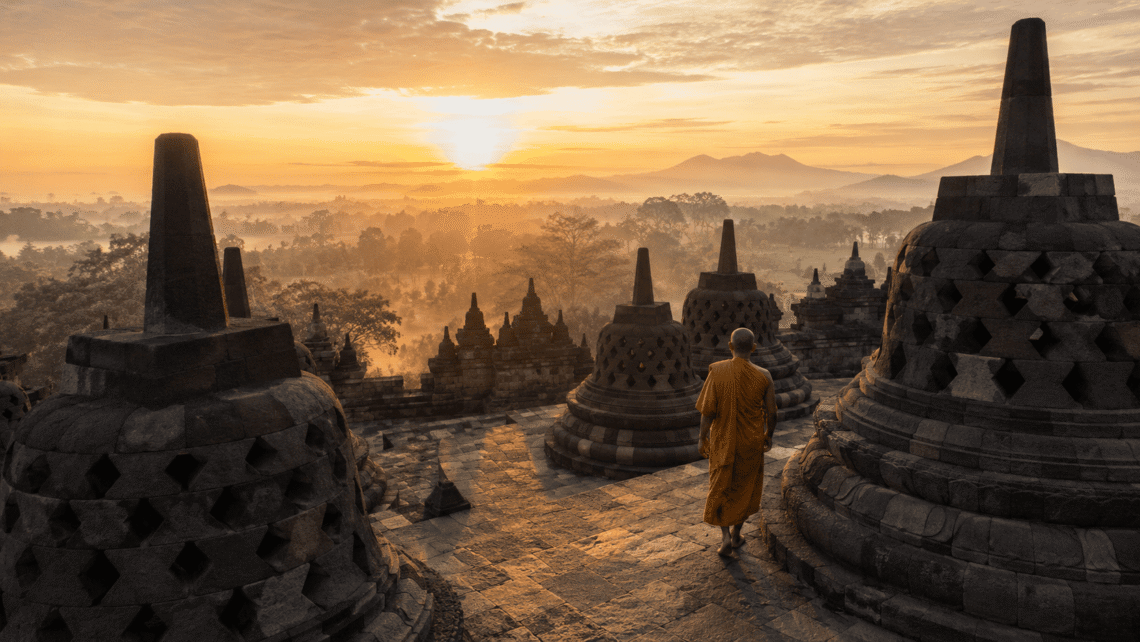
Arupadhatu represents the formless realm. The three circular platforms and the great central stupa express this highest level. The design becomes simpler and more open as visitors move upward.
Why the Journey Moves Upward
Borobudur encourages visitors to move around each gallery before climbing higher. This movement creates more than a physical route. It mirrors a gradual spiritual journey.
As visitors ascend, detailed reliefs slowly give way to open terraces and stupas. The visual change supports the transition from a world filled with stories and forms toward greater simplicity.
This combination of architecture and Buddhist ideas makes Borobudur unique. You can explore more background through our guide to facts about Borobudur Temple.
The Meaning Behind the Reliefs
Borobudur’s reliefs play an important role in its spiritual message. The carvings include Buddhist narratives, moral lessons, and scenes of daily life. They encourage visitors to reflect on actions, choices, and the path toward wisdom.
The galleries therefore work like a visual teaching space. A visitor can follow the stories while walking around the monument. This experience connects movement, art, and religious teaching in one journey.
Why Are There So Many Stupas?
The upper circular terraces contain 72 openwork stupas, each with a Buddha image inside. Their repeating forms create a calmer atmosphere than the detailed galleries below.
At the center, the large main stupa becomes the visual focus. Its position marks the final stage of the upward journey. The simpler design of the upper level reinforces the movement toward the formless realm.
Borobudur as a Place of Pilgrimage
Borobudur still carries spiritual meaning for Buddhists today. The temple plays an important role during Vesak celebrations and other religious activities.
For travelers, learning about this spiritual background can change the way they explore the monument. A local guide can explain symbols, stories, and details that visitors may otherwise miss.
Travelers who want a deeper guided experience can explore a private Borobudur tour from Yogyakarta. A guided visit can connect the architecture with the Buddhist philosophy behind each level.
Conclusion
The Borobudur Temple Buddhist Meaning lies in the relationship between architecture, movement, and Buddhist cosmology. Kamadhatu, Rupadhatu, and Arupadhatu create a symbolic path from desire toward liberation.
Take time to explore each terrace slowly. When you understand the ideas behind the monument, Borobudur becomes more than a historic site. It becomes a carefully designed spiritual journey expressed through stone.