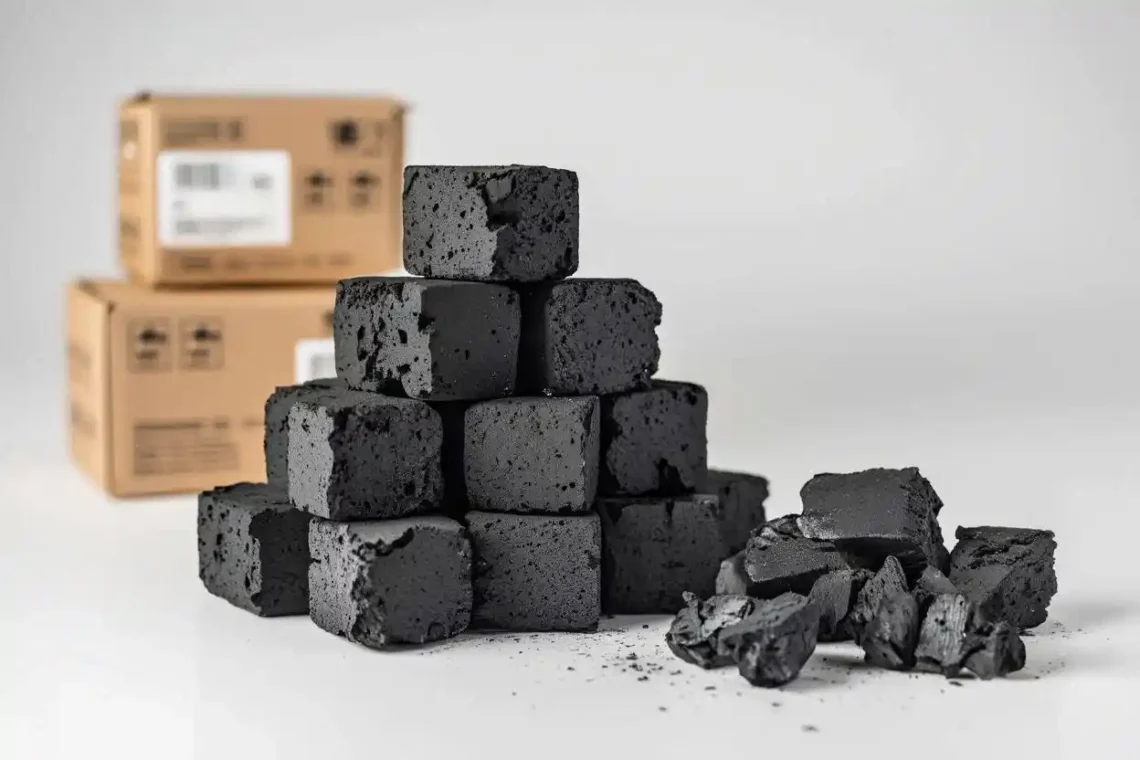
The global demand for sustainable fuel products continues to increase. One product that attracts strong international attention is coconut shell charcoal for export. Many distributors and hospitality businesses choose this charcoal because it burns efficiently and produces stable heat.
Moreover, coconut shell charcoal offers several advantages compared with traditional wood charcoal. It burns longer and produces less smoke. Therefore, many international buyers prefer this charcoal for commercial use.
Importance of Coconut Shell Charcoal Exports
Many producers focus on coconut charcoal because it uses renewable agricultural materials. Coconut shells are natural by-products from coconut processing. As a result, manufacturers can turn waste materials into valuable fuel products.
Furthermore, this production method reduces the need for cutting trees. Consequently, coconut charcoal supports more sustainable energy solutions.
In addition, coconut shell charcoal has a dense structure. Because of this density, it produces consistent heat and burns longer than many other charcoal types.
Quality Standards for Export Charcoal
International buyers usually expect high product consistency. Therefore, exporters must ensure that their charcoal meets strict quality standards.
Typical characteristics of export-quality charcoal include:
-
High fixed carbon content
-
Low moisture level
-
Minimal ash production
-
Uniform size and shape
-
Strong and durable briquettes
These qualities help maintain stable performance during use. Moreover, consistent briquettes simplify storage and transportation.
For this reason, many businesses choose to collaborate with a reliable coconut charcoal briquette supplier to secure consistent quality and stable production.
Global Demand for Coconut Shell Charcoal for Export
The international market for charcoal products continues to expand. Restaurants, barbecue businesses, and hookah lounges increasingly rely on reliable charcoal supplies.
Consequently, the demand for coconut shell charcoal for export remains strong in regions such as the Middle East, Europe, and North America. These markets value charcoal that burns longer and produces minimal smoke.
Meanwhile, hospitality businesses prefer charcoal that provides stable heat during cooking or shisha sessions. Therefore, coconut shell charcoal becomes a popular option in global markets.
Export Process for Coconut Charcoal
Exporting charcoal requires more than production alone. Businesses must also follow international shipping standards and quality control procedures.
Important export considerations include:
-
Secure and durable packaging
-
Moisture control during storage
-
Clear product specifications
-
Reliable logistics management
Proper preparation helps maintain charcoal quality during transportation. Furthermore, professional exporters usually test their products before shipment.
Business Opportunities in Charcoal Export
The international charcoal industry offers promising opportunities. Growing environmental awareness encourages businesses to seek renewable fuel sources.
As a result, coconut shell charcoal for export becomes an attractive product for entrepreneurs and manufacturers. Many importers actively search for reliable suppliers who can provide consistent quality.
If you want to learn more about charcoal products, market insights, and industry topics, jacoid.com provides a variety of informative blog articles and helpful resources.
Conclusion
Sustainable fuel products continue to gain global attention. Coconut shell charcoal stands out because it offers efficient burning performance and renewable raw materials.
Moreover, its long burning time and minimal smoke make it ideal for restaurants, barbecue businesses, and shisha lounges. For this reason, coconut shell charcoal for export remains highly demanded in international markets.
By maintaining strict quality standards and reliable supply chains, exporters can build strong partnerships with distributors and expand their presence in the global charcoal industry.