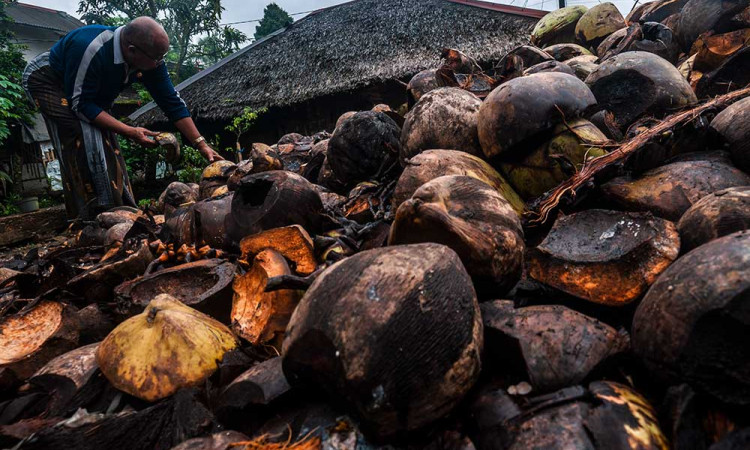
The increasing global demand for sustainable energy has driven the search for renewable and eco-friendly resources. Among various agricultural residues, coconut waste stands out as a highly promising material. With the continuous growth of coconut production, large amounts of by-products such as shells, husks, and fibers are generated.If not properly managed, these wastes can contribute to environmental problems. However, through coconut waste to energy conversion, these materials can be transformed into valuable energy sources while reducing pollution and supporting sustainability.
Coconut Waste to Energy Conversion Methods and Technologies
Coconut waste to energy conversion involves several advanced and traditional technologies that transform organic residues into usable energy. One of the most widely used methods is pyrolysis, where coconut shells are heated without oxygen to produce charcoal, bio-oil, and syngas.
This process is efficient and environmentally friendly, producing high-quality fuel products such as coconut shell charcoal briquettes, which are increasingly popular in global markets.
Another important method is gasification, which converts coconut waste into combustible gas through controlled oxidation. This gas can be used for electricity generation or industrial heating. Compared to direct burning, gasification is cleaner and more efficient, making it suitable for modern energy systems.
Anaerobic digestion is also utilized, especially for softer organic materials like coconut husks. In this process, microorganisms decompose organic matter in the absence of oxygen to produce biogas. This gas, rich in methane, can be used for cooking, heating, and small-scale power generation, particularly in rural communities.
In addition, direct combustion is still commonly used due to its simplicity. Coconut shells and husks are burned to generate heat energy, often for industrial purposes. Although this method is less efficient and produces more emissions, it remains a practical solution in areas with limited access to advanced technologies.
Converting Coconut Waste into Renewable Energy Solutions
The implementation of coconut waste to energy conversion provides significant environmental and economic benefits. First, it reduces the accumulation of agricultural waste, minimizing environmental pollution. Second, it offers a renewable energy source that helps decrease reliance on fossil fuels.
Moreover, this approach supports rural development by enabling communities to produce their own energy from locally available resources. It also creates economic opportunities by turning waste into valuable products, increasing income potential for farmers and industries.
To explore more about sustainable applications, you can visit renewable energy from coconut waste, which provides further insights into innovations and practical uses.
Challenges in Coconut Waste Energy Conversion Systems
Despite its advantages, coconut waste to energy conversion still faces several challenges. High initial investment costs and limited technical knowledge can hinder adoption, especially in developing regions. Additionally, inconsistent availability of raw materials may affect production efficiency.
However, technological advancements and increasing awareness of renewable energy are helping to overcome these obstacles. Future innovations are expected to improve efficiency, reduce costs, and expand scalability. With proper support from governments and industries, coconut waste can become a major contributor to sustainable energy systems worldwide.
Conclusion
Coconut waste offers a valuable and sustainable solution for energy production. Through various methods such as pyrolysis, gasification, and anaerobic digestion, agricultural residues can be efficiently converted into useful energy.
Coconut waste to energy conversion not only reduces environmental impact but also promotes economic growth and energy independence. With continuous development and wider adoption, this approach holds great potential for supporting a cleaner and more sustainable future.