
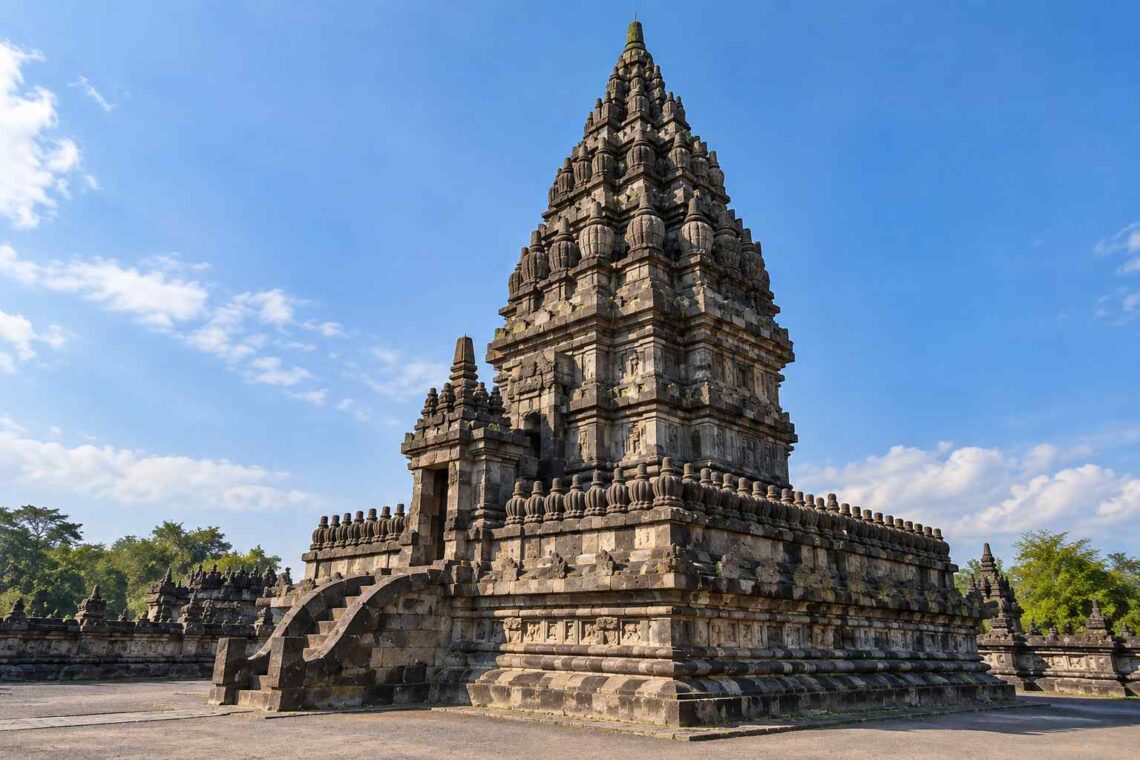
The Prambanan vahana temples are small shrines that many visitors overlook. They face the three great towers and honor the animal companions of the gods. However, these buildings hold some of the most charming ideas in the compound. Therefore, this guide explains who the animals are, where the shrines stand, and what they mean. Moreover, it shares simple tips for seeing them with care.
What Is a Vahana
In Hindu belief, a vahana is the animal or vehicle that carries a god. Each animal also expresses a quality of its master. As a result, the vahana helps worshippers understand the character of the deity. For wider design background, read this guide on Prambanan temple architecture explained for curious travelers.
Where the Shrines Stand
Three vahana temples face the main towers across the inner platform. Specifically, each one stands opposite the temple of its god. Consequently, the group forms a clear line of sight between master and companion. In addition, their smaller size makes the great towers look even taller.
The Bull Nandi
Nandi, the bull, serves Shiva. He symbolizes strength, loyalty, and patience. Therefore, his shrine stands directly opposite the central Shiva temple. Inside, the chamber once held a statue of the bull. Besides, Nandi appears in many Shiva temples across Asia, so visitors may recognize him.
The Eagle Garuda
Garuda, the great eagle, carries Vishnu. He represents speed, courage, and protection. Moreover, Garuda remains a national symbol in Indonesia, which makes his shrine especially meaningful to local visitors. His temple faces the Vishnu temple on the northern side.
The Swan Hamsa
Hamsa, the swan, serves Brahma. This graceful bird symbolizes wisdom and the ability to separate truth from illusion. Meanwhile, the swan shrine faces the Brahma temple on the southern side. Together with the other two, it completes the sacred set.
Prambanan Vahana Temples in the Layout
The compound follows a mandala plan, and every building has a role. Therefore, the vahana temples act as gatekeepers on the east side of the platform. In addition, they guide the eye toward the main towers. As a result, a slow walk shows how small and large structures work together.
Tips for Visiting
Visit early or late for soft light and fewer crowds. Wear light, modest clothing and closed shoes with good grip. Bring water, a hat, and sunscreen, since shade is limited. Besides, walk slowly and avoid touching the stone. Because restoration areas and access rules can change, confirm current details before you go.
Plan Your Visit with Local Experts
A guide can explain each animal in minutes. That is why Borobudur Tours can help. Their team offers organized packages, experienced guides, and flexible options for couples, families, and groups. As a result, you can focus on the stories behind the stone.
Conclusion
The Prambanan vahana temples show how animals, gods, and architecture join into one sacred idea. Consequently, pausing at these small shrines adds depth to your visit. In addition, a guide helps you notice the symbolism.
Ready to explore? Visit Borobudur Tours today and reserve your trip for a day you will remember.